Block 7, Cambridge Subdivision, Harvard St, Xavier St, Cagayan de Oro, 9000 Misamis Oriental


Local CDO Commercial Construction & Business Development Update | September 13, 2026
A major business event wrapped up in Cagayan de Oro this weekend—and beneath the franchising story is a construction story worth watching.
Franchise Negosyo para sa Mindanao was staged on September 11–12, 2026 at SM CDO Downtown Premier. Published event information reported more than 40 exhibitors representing 200+ franchise brands, together with business suppliers and seminars for prospective franchisees and existing businesses.
The event was significant locally because it marked Franchise Negosyo’s return to Cagayan de Oro after the pandemic and brought a broad range of food, retail and service concepts directly to Northern Mindanao entrepreneurs.
Every new restaurant, pharmacy, convenience store, café or service franchise eventually needs a physical space that turns the brand manual into a functioning Cagayan de Oro business.
For local investors, the construction sequence often becomes:
Location → Lease → Design → Permits → Fit-Out → MEPF → Equipment → Inspection → Opening
What Happened in CDO on September 11–12?
The two-day Franchise Negosyo Mindanao expo ran at SM CDO Downtown Premier and combined franchise exhibits with business-education sessions for people considering franchise investment or expansion.
One of the most important points for local readers is that the 200+ figure refers to franchise brands represented through the event. It does not mean 200 confirmed new stores are opening in Cagayan de Oro.
The expo created access to opportunities. Whether those opportunities become actual branches depends on investors, financing, franchise agreements, site selection, leasing, technical feasibility, permits and market demand.
Why Franchising Matters to CDO Construction
Once an entrepreneur decides to open a franchise, the physical work begins. The business may require a mall unit, roadside commercial space, kiosk, existing unit for renovation, drive-through location or standalone building.
Each option creates a different construction problem—and that is where proper site assessment and engineering matter.
1. Never Sign a Commercial Lease Based Only on Floor Area
An 80-square-meter unit may appear to meet a franchise’s space requirement, but floor area is only one variable. Investors should check electrical capacity, water supply, drainage, sanitary connection, exhaust routing, fire protection, ceiling height, structural restrictions, loading access, parking, signage rules and permitted use.
A space can be excellent for one business and unsuitable for another.
2. Food Franchises Are MEPF Projects Wrapped in Architecture
Customers see counters, finishes, lighting and branding. The construction team also sees kitchen power, plumbing, drainage, exhaust, grease management, air-conditioning and fire protection.
A beautiful restaurant with inadequate exhaust or insufficient electrical capacity is still a poor fit-out.
3. Check Electrical Loads Before Buying Equipment
Commercial kitchens and service businesses can carry substantial electrical demand from refrigerators, freezers, ovens, coffee machines, fryers, air-conditioning, water heaters, lighting, POS systems and signage.
A safer sequence is:
Equipment Schedule → Load Calculation → Electrical Design → Service Verification → Installation
Buying equipment before checking the existing electrical supply can create expensive upgrades and delay opening.
4. Exhaust Can Decide Whether a Restaurant Location Works
A visually attractive unit may still fail technically if there is no practical route for kitchen exhaust. In a mall or multi-storey commercial building, running a large duct through other occupied spaces may be prohibited or impractical.
That is why investors should involve a technical team before finalizing the lease whenever possible.
5. Drainage Needs to Be Coordinated Before Finishes
Food-service spaces need water and drainage for kitchen sinks, handwashing, cleaning, toilets and equipment. Depending on the operation, grease management may also be required.
Drain locations and pipe elevations should be coordinated before floor finishes are completed. Otherwise, contractors may end up cutting finished floors, relocating pipes, re-waterproofing and re-tiling.
6. Franchise Standards Do Not Replace Philippine Codes
Franchisors may provide standards for colors, furniture, counters, lighting, signage, equipment and layout. Those standards still have to work with actual site conditions and applicable Philippine requirements.
The project must coordinate:
Brand Standard + Site Condition + Philippine Codes + Local Requirements
Building, fire-safety, electrical, sanitary, plumbing, mechanical and accessibility requirements still matter.
7. Fire Safety Should Be Designed, Not Added at the End
Commercial renovation can affect exit routes, occupant loads, fire-rated construction, alarms, sprinklers, emergency lighting and, where applicable, kitchen suppression systems.
Trying to solve these issues after the interior has been completed can result in unnecessary rework and additional cost.
8. Mall Fit-Outs Add Another Layer of Requirements
A mall tenant works not only with government requirements, but also with landlord technical standards. These can cover construction hours, worker access, temporary protection, material deliveries, sprinkler modifications, air-conditioning, electrical connections, exhaust, waterproofing, signage, testing and turnover documentation.
The process can become:
Franchisor Approval → Landlord Approval → Permits → Construction → Testing → Inspection → Turnover
9. A Kiosk Is Small—but Not Necessarily Simple
A food kiosk may need to fit electrical equipment, refrigeration, water, drainage, storage, counters, lighting, signage, POS equipment and staff circulation into only a few square meters.
The smaller the space, the more important detailed coordination becomes.
10. Standalone Franchises Create Site-Development Questions
A roadside franchise can involve parking, driveway access, drainage, signage, utility coordination, waste storage, delivery areas, landscaping and drive-through circulation in addition to the building itself.
For drive-through businesses, planners should study:
Entrance → Queue → Ordering → Payment → Pickup → Exit
Vehicle queues that conflict with parking, pedestrians or public roads can turn a good-looking property into an operational problem.
Retail Fit-Outs Are Usually Schedule-Driven Projects
Franchise businesses often work toward fixed opening dates. Rent may already be running, staff may be hired, equipment may be ordered and marketing may be scheduled.
A strong fit-out schedule works backward from opening:
Opening ← Inspection ← Testing & Commissioning ← Equipment Installation ← Finishes ← MEPF Rough-In ← Site Preparation ← Approvals ← Design
Long-lead items such as imported equipment, refrigeration, specialty lighting, custom furniture, branded fixtures and signage should be identified early.
CDO Homegrown Brands Could Create Another Opportunity
The September program also included education for businesses that want to franchise their own concepts. That is important for Cagayan de Oro because a successful homegrown brand may eventually need a repeatable store-construction system.
That system can include standard floor plans, typical construction details, material schedules, MEPF requirements, equipment schedules, signage specifications, BOQ templates and construction checklists.
The goal becomes:
Branch 1 Quality = Branch 5 Quality = Branch 20 Quality
A Prototype Store Can Reduce Future Construction Problems
A CDO business preparing to franchise can benefit from developing a prototype store that establishes minimum area, ideal frontage, kitchen or service flow, electrical requirements, plumbing requirements, equipment, finishes, signage and typical construction cost.
Potential franchise locations can then be tested against the prototype before a lease is signed.
Construction Cost Should Be Part of Franchise Feasibility
Investors often focus on the franchise fee and equipment package, but total capital requirements may also include lease deposits, architectural and engineering services, permits, fit-out construction, furniture, signage, utility upgrades and pre-opening expenses.
A useful feasibility equation is:
Franchise Fee + Lease + Design + Permits + Fit-Out + Equipment + Utilities + Pre-Opening Cost
The fit-out should be estimated before the investor assumes the project is financially viable.
Why This Matters Beyond SM CDO Downtown
Although the event was held in downtown Cagayan de Oro, its market was broader than one mall or one city. Northern Mindanao growth areas such as Opol, El Salvador City, Laguindingan, Tagoloan, Manolo Fortich, Malaybalay and Valencia may also attract future commercial expansion as population, transport infrastructure and consumer demand grow.
This is a market implication, not a confirmed list of franchise openings.
Construction Follows Commercial Confidence
Commercial construction ultimately begins with a business decision:
Investment → Location → Design → Construction → Operation
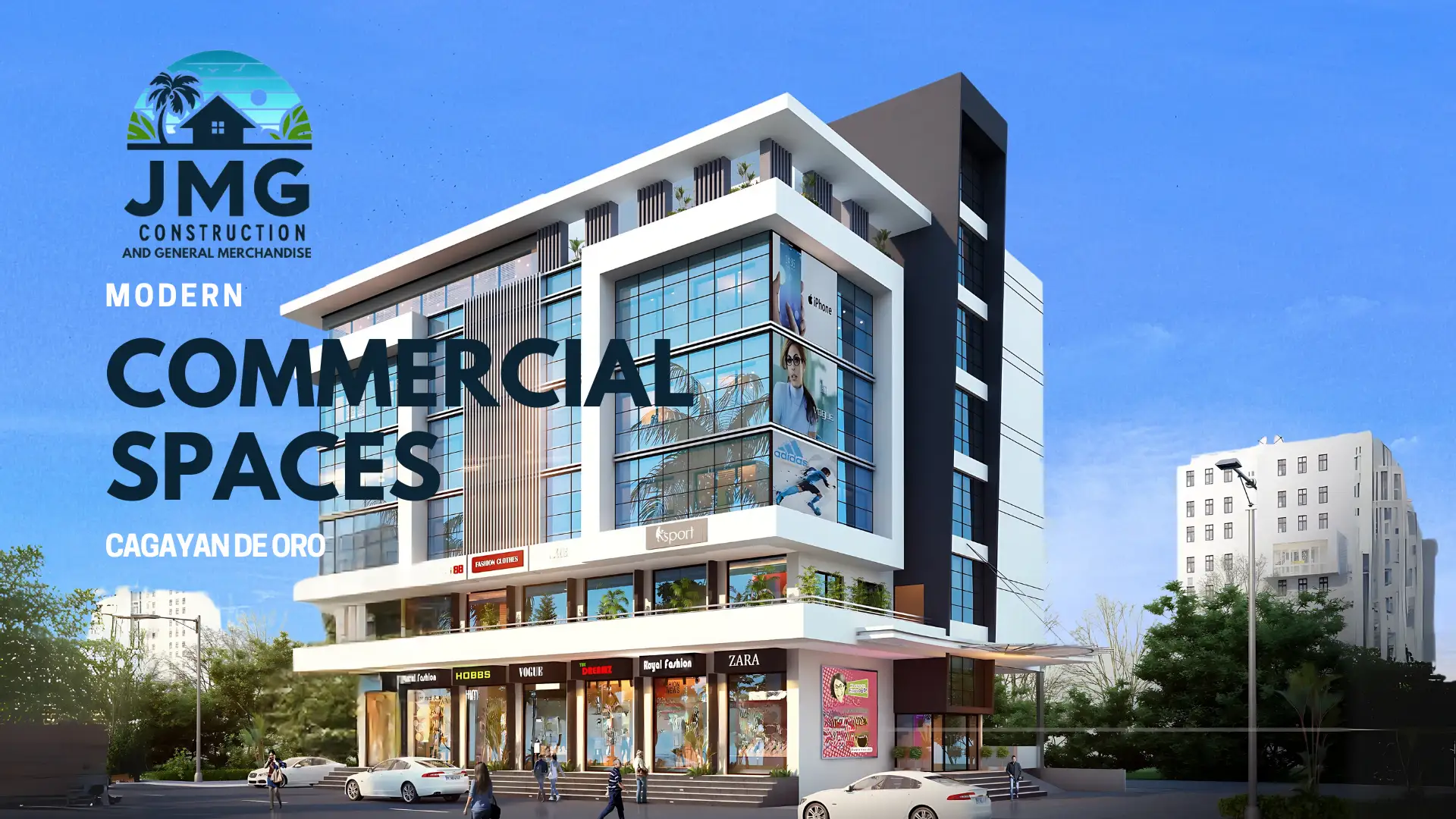
When more entrepreneurs evaluate new business concepts, the downstream opportunity can include retail fit-outs, restaurant construction, commercial renovation, MEPF works, signage, standalone buildings and site development.
What Is Confirmed—and What Is JMG Analysis
Confirmed: Franchise Negosyo para sa Mindanao was held in Cagayan de Oro on September 11–12, 2026 at SM CDO Downtown Premier, with published event information reporting 40+ exhibitors and 200+ represented franchise brands.
Not confirmed: The event does not mean that 200 stores are opening in CDO, that every participating brand has committed to a local branch, or that a specific value of construction work has already been awarded.
The discussion above about retail fit-outs, commercial construction, MEPF demand, prototype stores and potential expansion across Northern Mindanao is JMG construction-industry analysis based on the technical requirements that follow when a franchise investment moves into an actual physical location.
The Construction Lesson From Franchise Negosyo CDO
A franchise can provide a brand, product, operating system and marketing strategy. The business still needs a physical environment that works.
Before signing a commercial lease, check whether the space can technically support the operation.
Site → Utilities → Technical Feasibility → Cost → Lease → Design → Permits → Fit-Out → Opening
Opening a Franchise, Restaurant or Commercial Space in CDO?
JMG Construction & General Merchandise can help evaluate the physical side of the investment before construction begins.
For commercial and franchise projects, JMG can coordinate:
Site Assessment → Space Planning → Architecture → MEPF → Cost Estimate → Fit-Out → Construction → Project Management
Before you sign a lease or begin renovation, let the technical team check whether the space can actually support the business you want to put inside it.
Call: 0917-105-6435
Email: teamJMG@GoogleGroups.com
Website: www.jmgbuild.com
Read more local construction and development updates at JMG Local CDO, explore construction services in Cagayan de Oro, or contact JMG Construction.